Training & Transition
Exploring capacity-building for housing management through hiring, orientation, training, mentorship, leadership development and succession planning.
Housing Knowledge Grows Through People
Training and Transition explores capacity-building for housing management, including hiring, training and mentorship programs.
Strong housing programs require continuous learning and skill development for housing managers and directors, staff, leadership and tenants. Professional development can include workshops, webinars, certification programs and other learning resources.
The goal is not only to fill positions, but to help people feel prepared, supported and able to carry housing knowledge forward.
Training & Transition Highlights
A quick snapshot of key housing roles, programs and practices.
four
Key Housing Roles
Manager or Director, Tenant Relations, Housing Wellness and Maintenance
five
Featured Programs
Certification and leadership programs for housing teams
Ongoing
Orientation
Training is especially important when leadership, staff or program rules change
Shared
Knowledge
Mentorship, shadowing and peer support help protect community housing knowledge
From Recruitment to Leadership
Recruitment, orientation, training, mentorship and succession planning work together as parts of one continuous capacity-building process.
01
Hire
Define housing roles, qualifications and job descriptions, and recruit people who can grow into the work.
02
Orient
Help new staff and leadership understand programs, budgets, reports, tenants, partners and future plans.
03
Train
Use workshops, courses, certifications and practical learning to strengthen housing skills.
04
Mentor
Pair staff with experienced people, tribal councils, peers and technical supports who can share practical knowledge.
05
Transition
Use shadowing and succession planning to prepare for retirement, resignations or leadership changes.
06
Lead
Build confidence in strategy, policy, accountability, budgeting, conflict resolution and team management.
Orientation Is More Than a First Day
The 2023 Building for the Future symposium described orientation as helping leadership and staff understand the complexity of housing. Communities noted that orientation is useful whenever there are changes in leadership, staffing or financing rules.
A practical orientation can introduce the real picture of the housing program and the work that keeps it moving.
Reports
What is being reported, to whom, and when?
Budgets
Where does housing money come from and what obligations exist?
Work Plans & Work Orders
How are priorities organized and tracked?
Meetings, Partners & Tenants
Who needs to be involved and how are relationships maintained?
Key Housing Roles
Four core roles can help guide job descriptions and qualifications. Responsibilities will vary by Nation and local housing structure.
Training Has to Reach Leadership Too
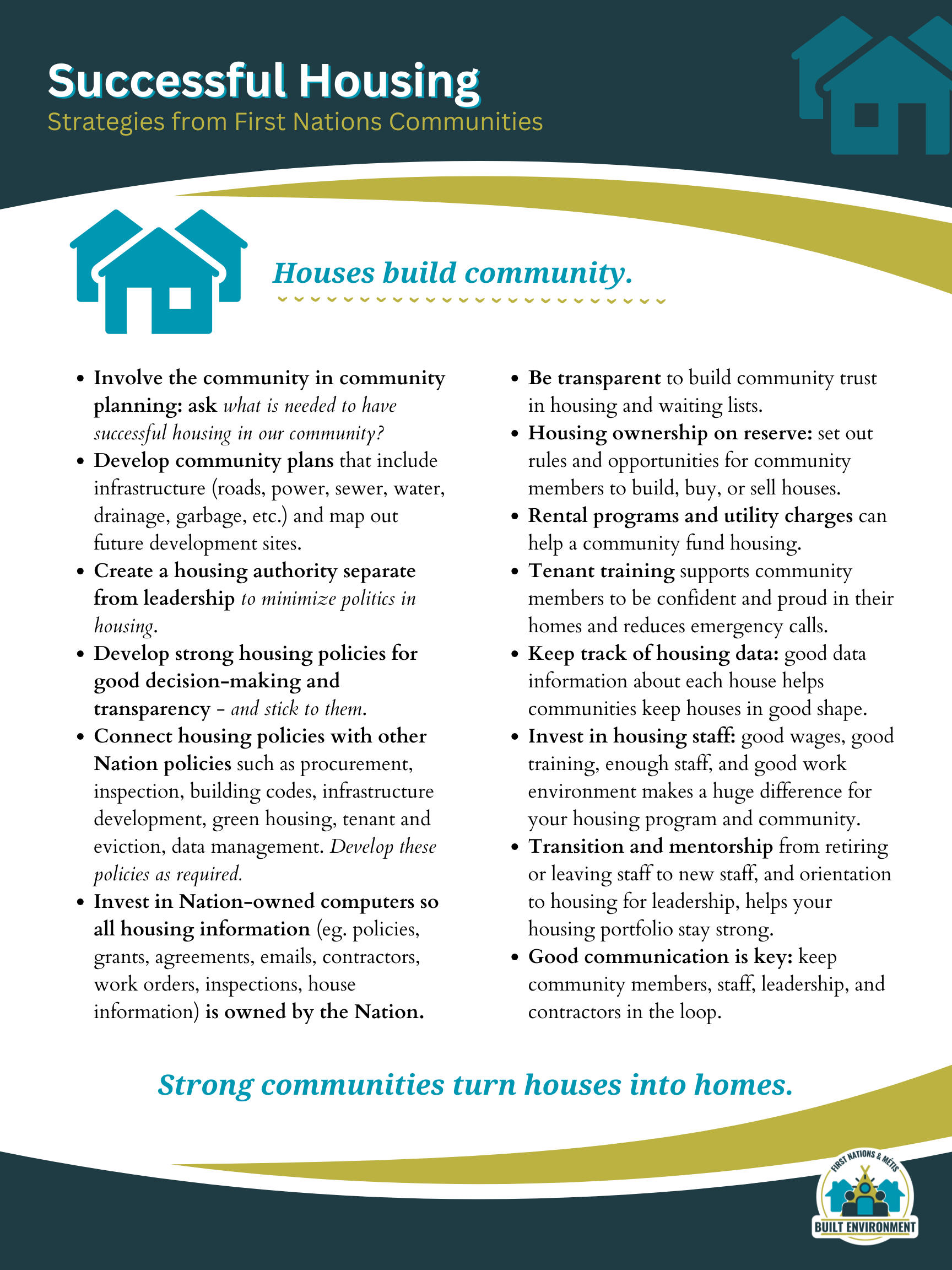
Training connects directly with housing strategy, policy and accountability. Leadership development can include sustainable housing policy, housing governance, funding models and accountability.
It also identifies the importance of a supportive workplace culture where staff can raise concerns, collaborate with leadership and access resources when work pressures become difficult.
Housing Condition Assessment & Software Examples
Housing Condition Assessments help document the physical condition of homes and support future maintenance and housing planning. TSAG provides one example of using an app and integrated database, followed by several other software tools that can support housing data collection, reporting and management.
Programs to Explore
The following programs offer learning opportunities in leadership, housing management, public works and Indigenous skills development.
Johnson Shoyama Graduate School of Public Policy
Leadership-focused professional development identified in the Housing Hub research.
Saskatchewan Indian Institute of Technology
A Saskatchewan-based program connected to public works and housing management.
First Nations Housing Professionals Association
Professional development specifically focused on First Nations housing.
Vancouver Island University
Online learning focused on First Nations housing management.
Supported by Canada Mortgage and Housing Corporation
A specialized program identified for Indigenous housing professionals.
Planning for the Future
A practical succession-planning approach is to create a leadership training program with workshops led by senior staff, shadowing opportunities and mentorship pairings.
Workshops can address conflict resolution, budgeting and team management, while mentorship can provide practical advice on real housing situations. The purpose is to prepare staff for leadership roles and preserve essential housing knowledge as senior staff retire or resign.
Workshops
Conflict resolution, budgeting and team management
Shadowing
Learn the real workflow before taking on full responsibility
Mentorship
Carry practical knowledge between experienced and emerging staff
Built From Community Conversations
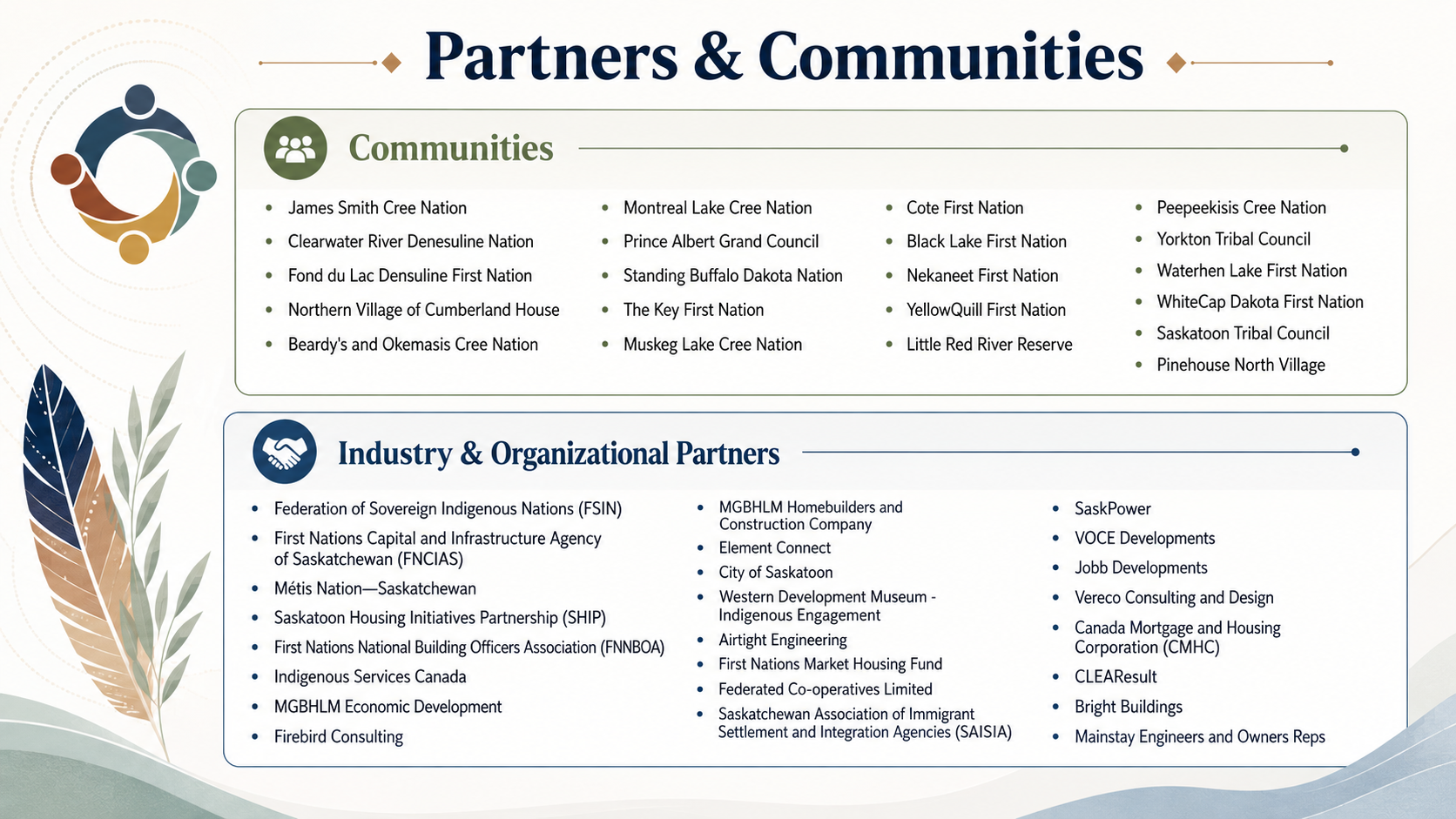
The Training & Transition focus area grew from the broader First Nations & Métis Built Environment work and the Building for the Future housing and health symposium.
The original framework described Training & Transition as the capacity to hire, train, mentor and support leadership, housing managers and administration so they feel comfortable and well-equipped to work in housing. It also includes career pathways, skills and trades development, and tenant education.
The standalone Saskatchewan First Nations Housing Hub carries that work forward as a practical resource that can continue to grow with community knowledge and experience.